Ask anyone to name a dental procedure they dread, and root canal therapy will almost certainly top the list. The phrase alone is enough to make people put off treatment for weeks sometimes until the pain becomes unbearable. But here is the truth most people don't know: a root canal doesn't cause pain. It ends it.
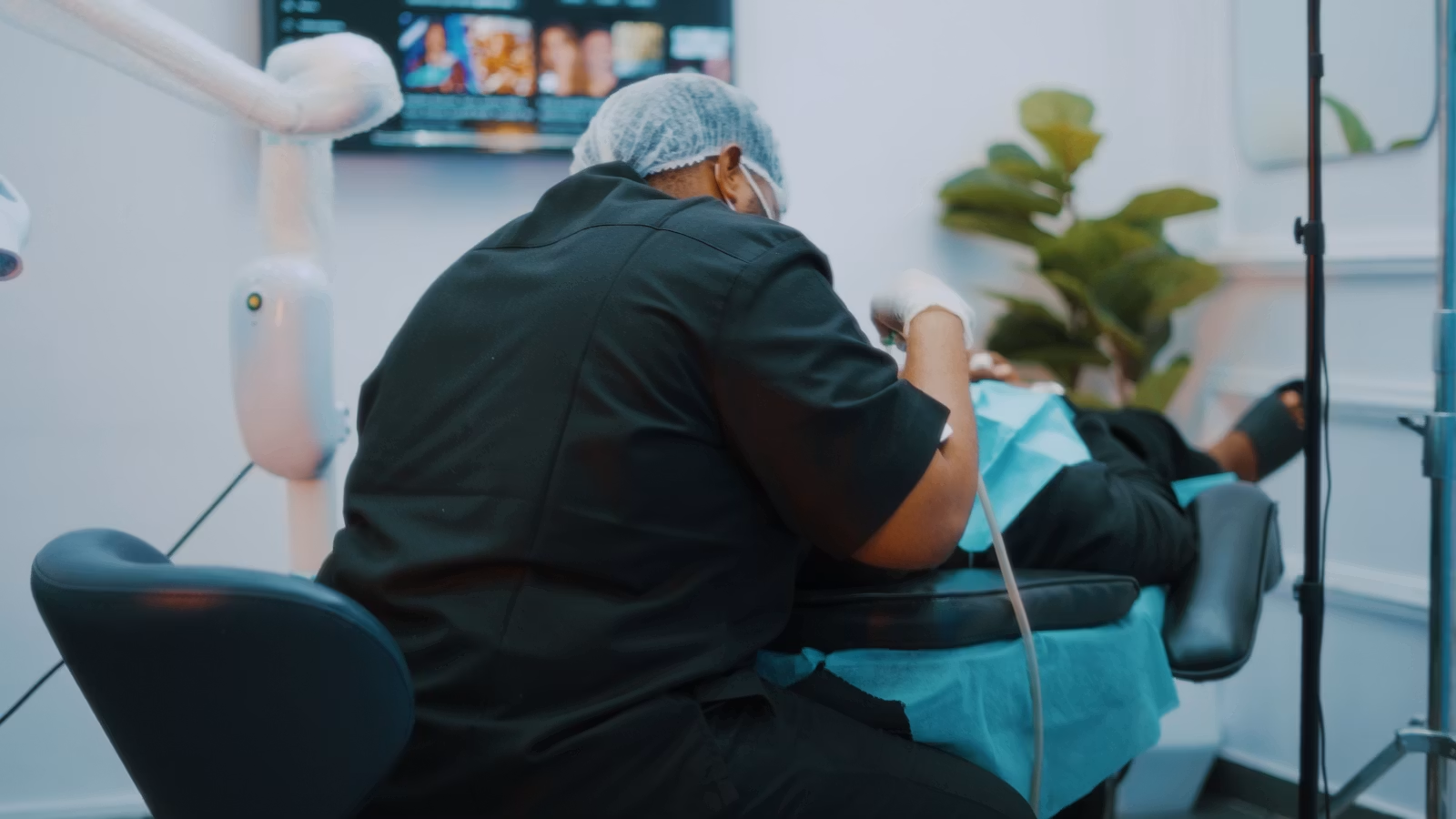 Modern endodontic treatment is a comfortable, routine procedure.
Why a Tooth Becomes Infected
Inside every tooth, beneath the hard enamel and dentine, is a soft tissue called the pulp. This pulp contains nerves, blood vessels, and connective tissue it's what made the tooth sensitive and helped it grow during development.
When bacteria reach the pulp through deep decay, a cracked tooth, or a failed filling the tissue becomes inflamed and infected. The pulp cannot heal on its own once infected. The pressure builds, the nerve fires continuously, and the result is the sharp, throbbing, keep-you-awake-at-night pain that drives people to emergency appointments.
Root canal therapy removes the infected pulp, cleans the canals, and seals the tooth so it can remain in your mouth for decades.
What "Root Canal" Actually Means
The root canals are simply the natural channels inside the root of your tooth the hollow passages that run from the pulp chamber down through each root. A molar may have three or four of them. A front tooth typically has one.
"Root canal therapy" refers to cleaning, shaping, and sealing these canals. Nothing more dramatic than that.
The Procedure, Step by Step
At The Dental Atelier, root canal procedures are performed by Dr. Mahnoor Maryam, our specialist Endodontist with advanced training in operative dentistry and endodontics. Here is what the appointment looks like:
1. Local Anaesthesia
Before anything else, the area is fully numbed. You should feel pressure and movement not pain. If you feel any discomfort at any point, tell us immediately and we will add more anaesthetic. There is no reason to tough it out.
2. Isolation
A small rubber dam is placed around the tooth to keep the area clean, dry, and free from saliva. This protects you and makes the procedure easier.
3. Access Opening
A small opening is made through the top of the tooth to reach the pulp chamber inside.
4. Canal Shaping and Cleaning
Using fine, flexible instruments (often nickel-titanium files), the pulp tissue is carefully removed and the canals are shaped to a precise taper. Irrigating solutions flush out bacteria and debris throughout this stage.
5. Obturation (Sealing)
Once the canals are clean and dry, they are filled with a biocompatible material called gutta-percha a rubber-like substance that seals the space and prevents re-infection. A temporary or permanent filling is placed on top.
6. Restoration
In a follow-up appointment, the tooth is typically restored with a crown. Because the pulp is removed, the tooth no longer receives its internal blood supply and can become more brittle over time. A crown protects it from fracture and restores full function.
Does It Hurt?
The short answer: not during the procedure itself. The area is anaesthetised before any instruments enter the tooth. Most patients are surprised by how uneventful the experience is it feels similar to having a filling placed.
After the appointment, as the anaesthetic wears off, you may notice some tenderness around the tooth for two to three days. This is normal: the surrounding tissues were inflamed before treatment and need time to settle. Over-the-counter pain relief is usually sufficient, and most patients return to normal activities the same day.
The pain that sends people to us the throbbing, the sleepless nights, the sensitivity to heat typically resolves within a day or two of treatment.
When Is Root Canal Therapy Needed?
Common signs that the pulp may be infected or inflamed:
- Severe, spontaneous toothache pain that comes without any trigger and lingers
- Prolonged sensitivity to hot or cold discomfort that doesn't fade after the stimulus is removed
- Pain on biting or chewing
- Darkening of the tooth
- A pimple-like swelling on the gum near the affected tooth (a dental abscess)
- Facial swelling this warrants urgent attention
An X-ray will show the condition of the bone around the root tips and confirm whether infection is present.
The Alternative: Extraction
Some patients ask: "Why not just pull it?" It's a fair question.
Extraction eliminates the immediate problem, but leaves a gap. Over time, neighbouring teeth drift into that space, the bone beneath begins to resorb, and chewing efficiency decreases. Replacing the missing tooth with an implant, bridge, or denture costs more than root canal therapy in almost every case.
Saving a natural tooth is always the preferred outcome when it's viable. Your own tooth, even without its pulp, is structurally superior to any replacement.
Success Rates and Longevity
When performed by a trained endodontist with proper technique and crowned afterwards, root canal therapy has a success rate exceeding 90 percent. Many treated teeth last a lifetime.
Failure is rare but can occur if canals are missed (some teeth have unusual anatomy), if the crown is delayed, or if the patient develops new decay around the restoration. Regular dental check-ups catch these situations early.
Common Myths About Root Canal Therapy
"Root canals are extremely painful." This is the most persistent myth, and it has it backwards. The infection causes the pain; the treatment, performed under proper anaesthesia, relieves it. Most patients describe the appointment itself as no more uncomfortable than getting a filling.
"It's better to just pull the tooth." Extraction is faster and sometimes unavoidable, but as covered above, it creates a gap that shifts neighbouring teeth and requires bone remodeling. Where the tooth can be saved, keeping it is almost always the better long-term outcome — nothing replaces a natural tooth as well as the tooth itself.
"A root-canal-treated tooth is 'dead' and will eventually fall out." Removing the pulp does mean the tooth loses its internal blood supply, which is exactly why a crown is recommended afterwards — it protects the now more brittle tooth from fracture. With that protection in place, a treated tooth commonly lasts decades, functioning normally for chewing and biting.
"One root canal always leads to another." A well-performed root canal, properly sealed and crowned, does not need to be repeated. Retreatment is only needed in the minority of cases where infection persists or recurs — not as a routine part of the process.
"You'll need weeks off work." Most patients return to normal activity the same day, aside from some tenderness for a couple of days that usually responds to over-the-counter pain relief.
Caring for Your Tooth After Treatment
In the first 24 to 48 hours, mild soreness around the tooth and gum is normal. Some practical guidance for this period:
- Avoid chewing on the treated side until any temporary filling has fully set and, ideally, until the permanent crown is placed — the tooth is more vulnerable to cracking before it's protected.
- Stick to softer foods for the first day or two if the area feels tender.
- Take pain relief as advised — over-the-counter medication is usually sufficient; contact the clinic if pain is severe or worsening rather than improving.
- Keep up normal brushing and flossing everywhere else in the mouth; there's no need to avoid the area entirely, just be gentle around it.
- Don't delay the follow-up crown appointment. A tooth left with only a temporary filling for an extended period is at real risk of fracturing before it's properly protected.
Contact your dentist if you notice increasing pain, swelling, or a return of the original symptoms after the first few days — this is uncommon, but worth checking promptly rather than waiting it out.
What Happens If You Delay Treatment
Putting off a root canal when one is genuinely needed rarely makes the problem go away — it usually just changes shape.
In some cases the initial sharp pain fades as the nerve tissue dies completely, which can feel like the problem has resolved itself. In reality, the infection typically continues spreading through the bone around the root, often silently, until it flares up again as a swelling, an abscess, or a more serious infection. By that point, treatment is usually more complex, and in some cases the tooth is no longer salvageable at all, leaving extraction as the only remaining option.
Waiting also removes choice. A tooth treated promptly with a root canal has a very good chance of functioning normally for decades. A tooth left until the infection has caused significant bone loss may need additional procedures alongside the root canal itself, or may not be savable. If a dentist has told you a tooth needs root canal treatment, treating it sooner rather than later almost always means a simpler, cheaper, and more predictable outcome.
A Note on Retreatment
If a previously treated tooth becomes re-infected for example, years later due to a new crack the procedure can sometimes be redone. Retreatment cleans the old filling material from the canals and reseals them. It is more complex than an initial treatment but avoids extraction in many cases.
The reputation root canal therapy carries bears little resemblance to what the procedure actually involves today. Modern endodontics, performed with proper anaesthesia and specialist training, is a reliable, comfortable way to save a tooth that would otherwise need to be removed.
If you have been putting off an appointment because of pain or anxiety, we are here to help. Get in touch with us and let's talk about what you are experiencing — the solution is almost certainly simpler than you expect.