Clear aligners and braces both move teeth. The better option depends on how complex your case is, how disciplined you can be, and what kind of treatment experience you prefer.
Reading time: ~5 minutes

Most people who come in asking about straighter teeth already have one question in mind:
"Can I avoid braces and get Invisalign instead?"
It is a fair question. Clear aligners have become popular because they are removable, discreet, and easier to fit into adult routines. Traditional braces, on the other hand, have been used for decades and are still one of the most reliable ways to correct more complex tooth movement.
At The Dental Atelier, the first step is not choosing between aligners and braces. The first step is understanding your teeth, your bite, your expectations, and your lifestyle. Once that is clear, the right option usually becomes easier to explain.
What Invisalign and clear aligners are
Invisalign is one of the best-known clear aligner systems. The treatment uses a series of transparent trays that fit over your teeth and gradually move them into a better position.
Each set of aligners is worn for a specific period before moving to the next one. Since they are removable, you take them out while eating, drinking anything other than water, brushing, and flossing.
For many patients, this is the biggest attraction. The aligners are much less noticeable than braces, and daily cleaning is usually easier.
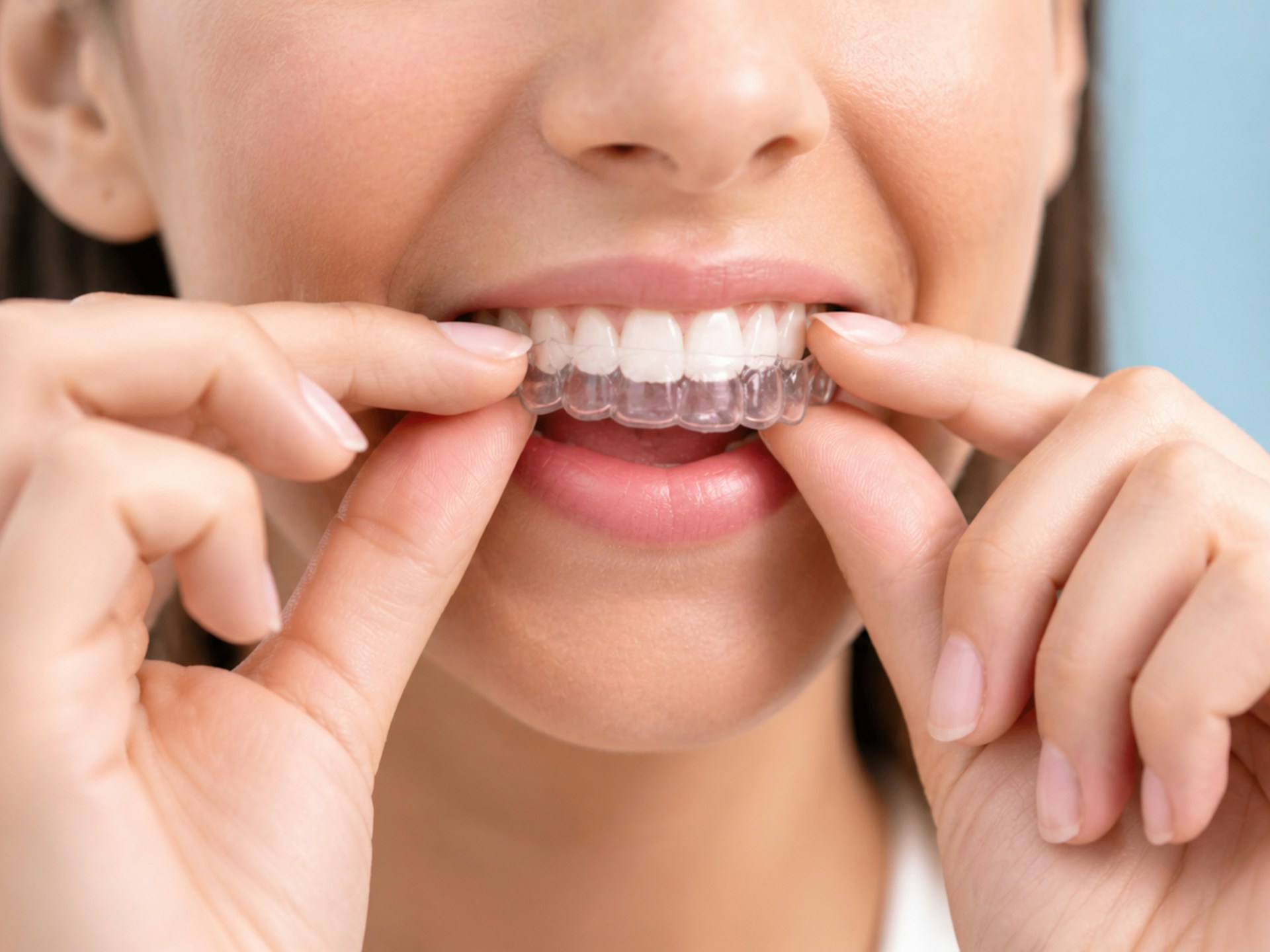 Photo by Harold Hizon on Unsplash
What traditional braces are
Traditional braces use small brackets attached to the teeth, connected by wires that guide tooth movement over time. They may be metal or tooth-coloured, depending on the case and patient preference.
Braces are fixed, which means they keep working all day and night. You do not need to remember to wear them. This can be an advantage for younger patients, busy adults, or anyone who may struggle with wearing aligners for the required number of hours each day.
They are also very effective for more difficult orthodontic cases, especially where teeth need significant movement or the bite needs detailed correction.
Appearance and comfort
Clear aligners are usually the more discreet option. Most people will not notice them immediately, especially from a normal speaking distance.
Braces are more visible, although ceramic or tooth-coloured brackets can make them less obvious. Some patients do not mind the appearance of braces at all, while others prefer something more subtle for work, university, weddings, or social events.
In terms of comfort, both options can cause pressure or soreness when teeth start moving. Aligners may feel tight for the first day or two after switching to a new tray. Braces can sometimes irritate the cheeks or lips at the start, but most patients adjust within a few days.
Eating and cleaning
This is one area where aligners feel more convenient.
With clear aligners, you remove the trays before meals. That means you can usually eat normally, as long as you brush before putting the aligners back in.
With braces, you need to be more careful. Very hard, sticky, or chewy foods can damage brackets or wires. Cleaning also takes more time because food can get trapped around the brackets.
That said, aligners require discipline. If they are not worn for the recommended hours every day, treatment can slow down or stop progressing properly.

Which one works faster?
There is no single answer.
For mild spacing, small rotations, or minor alignment concerns, clear aligners can work very efficiently. For more complex crowding, bite correction, or teeth that need controlled movement, braces may be more predictable.
The treatment time depends on the starting position of your teeth, the health of your gums and bone, and how closely you follow instructions. A proper consultation, examination, and scan or X-ray are needed before giving a realistic timeline.
Which option is better for adults?
Many adults prefer clear aligners because they fit more easily into professional and social life. They are less visible in meetings, photographs, and everyday conversations.
But braces are still a strong option for adults, especially when the case is more complex or when the patient wants a treatment that does not rely on remembering to wear trays.
The better choice is not always the more modern-looking one. It is the one that can safely and predictably move your teeth into the right position.
Which option is better for teenagers?
For teenagers, the decision often depends on responsibility and case complexity.
Clear aligners can work well for teens who are consistent and careful. But if aligners are frequently removed, misplaced, or not worn long enough, results can suffer.
Braces may be a better fit for patients who need more control or who are unlikely to wear aligners properly every day.
Cost in Pakistan
The cost of clear aligners and braces in Pakistan varies depending on the complexity of the case, the treatment duration, the system used, and the number of visits required.
Clear aligners are often more expensive than traditional metal braces because of the digital planning and custom tray fabrication involved. Ceramic braces may also cost more than standard metal braces.
A consultation is the best way to get a realistic estimate because two patients asking for “straight teeth” may need very different levels of treatment.
A day in the life with each option
It helps to picture the daily reality rather than just the treatment concept.
With aligners, mornings and evenings involve popping the trays out to eat and brush, then back in — a habit that takes a week or two to become automatic. Through the day, you remove them for meals and any drink besides water, which means a bit of extra planning at work lunches or social events, but no adjustment to what you can actually eat. Most patients report mild lisping or awareness of the trays for the first few days of each new set, settling quickly.
With braces, there's no daily removal to think about, which some patients find simpler precisely because there's no decision to make. Meals require more thought — hard, sticky, or crunchy foods are avoided entirely for the duration of treatment, not just adjusted around. Brushing takes a few extra minutes to clean properly around brackets and wires, and an interdental brush or floss threader becomes a permanent part of the routine.
Neither routine is objectively harder; they simply ask for discipline in different places — aligners ask for consistency in wearing them, braces ask for care in what you eat and how you clean.
Retention after treatment
This is a step both options share, and one that's sometimes overlooked when comparing them: however you straighten your teeth, they will drift back towards their original position without something holding them in place afterwards.
Most patients are given a retainer once active treatment ends — either a removable retainer worn at night, a fixed wire bonded behind the front teeth, or both. Skipping retention is the single most common reason for orthodontic relapse, regardless of whether the original treatment was aligners or braces. If retention is not mentioned as part of your treatment plan, it's worth asking about directly.
The health benefits beyond appearance
It's easy to frame this decision purely around looks, but straighter teeth carry real functional benefits regardless of which method gets you there.
Crowded or overlapping teeth are harder to clean thoroughly, which means more plaque trapped in places a brush can't easily reach — a direct contributor to cavities and gum inflammation over time. A misaligned bite can also place uneven force on certain teeth, leading to premature wear, jaw discomfort, or strain on the jaw joint in more pronounced cases.
Correcting alignment, by either method, generally makes a mouth easier to keep clean and distributes biting forces more evenly. This is part of why orthodontic treatment is often recommended even when a patient's main concern is purely cosmetic — the appearance improves, and so does the underlying oral health.
So, which one should you choose?
Choose clear aligners if you want something discreet, removable, and easier to clean, and if your case is suitable for aligner treatment.
Choose braces if your case is more complex, if you need more controlled tooth movement, or if you prefer a fixed option that works without daily wear-time decisions.
The most important thing is not the appliance itself. It is the diagnosis, planning, and follow-up behind it. A well-planned course of braces will consistently outperform a poorly-planned course of aligners, and the reverse is just as true.
At The Dental Atelier, Our Orthodist assesses your smile, bite, tooth position, and lifestyle before recommending the most suitable option. The aim is not just straight teeth, but a healthier and more balanced smile that feels right for you.
Thinking about clear aligners or braces? Book a consultation with our orthodontist here at The Dental Atelier in DHA Phase 2, Islamabad, to understand which option is better suited to your teeth and lifestyle.