Dental implants are not just about replacing a missing tooth. They are about restoring function, protecting bone, and giving you a replacement that feels as close to natural as modern dentistry can offer.
Reading time: ~7 minutes

Losing a tooth can feel small at first, especially if it is not immediately visible when you smile. Many people delay treatment because they can still chew, talk, and manage daily life.
But a missing tooth does not stay an isolated problem forever.
Over time, the neighbouring teeth can start drifting into the empty space. The bite can change. Chewing may become uneven. Most importantly, the jawbone in that area can begin to shrink because it is no longer being stimulated by the tooth root.
This is where dental implants are different from other replacement options.
A bridge replaces the visible part of the tooth. A denture also replaces the visible part of the tooth. A dental implant replaces the root as well.
That one difference is why implants are often considered a long-term investment in both your smile and your oral health.
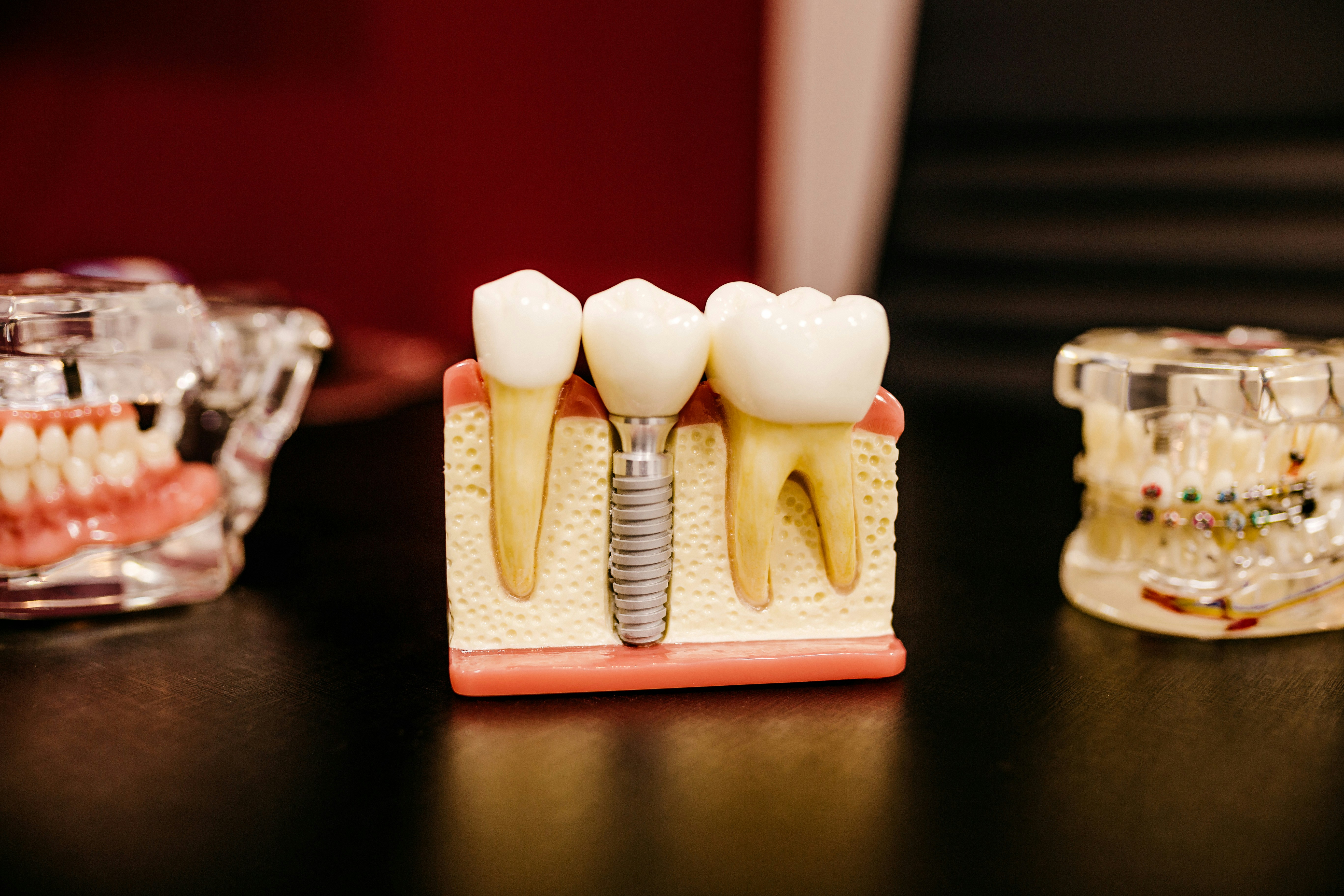 Photo by Jonathan Borba on Unsplash
What exactly is a dental implant?
A dental implant is a small titanium post placed into the jawbone where a tooth is missing. Once placed, the implant gradually fuses with the surrounding bone through a natural healing process.
After healing, a custom crown is attached on top. This crown is the part you see when you smile or chew.
So when people say they are getting an implant, they are usually talking about three parts:
The implant itself, which sits in the bone.
The abutment, which connects the implant to the final tooth.
The crown, which looks and functions like the visible tooth.
Together, these parts create a stable tooth replacement that does not rely on support from the neighbouring teeth.
Why implants protect the jawbone
Natural teeth keep the jawbone active through chewing forces. When a tooth is removed, that stimulation disappears. Over time, the bone in that area can reduce in height and width.
This is one of the main reasons dentists recommend replacing missing teeth sooner rather than later.
Because an implant sits inside the bone, it helps maintain stimulation in that area. This can reduce the bone loss that commonly follows tooth loss.
This matters not only for chewing, but also for facial support. When multiple teeth are missing for a long time, changes in bone volume can affect the shape of the lower face.
Implants vs bridges
Dental bridges have been used successfully for many years, and in some cases they are still a good option.
A bridge usually involves preparing the teeth on either side of the missing space. These teeth act as supports for the replacement tooth in the middle.
The advantage is that a bridge can often be completed faster than an implant. The downside is that healthy neighbouring teeth may need to be trimmed, even if there is nothing wrong with them.
An implant, when suitable, replaces the missing tooth independently. It does not require cutting down the adjacent teeth.
That is a major reason many patients choose implants, especially when the teeth on either side of the gap are healthy.

Implants vs dentures
Dentures can be helpful when multiple teeth are missing, especially when a patient needs a more affordable or quicker solution.
But removable dentures can move during eating or speaking. They may need adjustment over time as the gums and bone change. Some patients also find them uncomfortable or difficult to get used to.
Implants are fixed. They do not come out at night, and they do not usually move while chewing or speaking.
For patients missing several teeth, implants can also be used to support bridges or improve denture stability. This can make a significant difference in comfort and confidence.
What the procedure involves
Dental implant treatment usually happens in stages.
First, the dentist assesses your mouth, gums, bite, medical history, and bone levels. X-rays or 3D imaging may be needed to check whether there is enough bone to support the implant.
If the site is suitable, the implant is placed into the jawbone under local anaesthesia. Most patients are surprised that the procedure is more comfortable than they expected.
After placement, the implant is left to heal. This healing phase allows the implant to integrate with the bone. It can take a few months depending on the case, bone quality, and whether any additional procedures were needed.
Once healing is complete, the final crown is designed and fitted.
The result is a replacement tooth that looks natural, feels stable, and allows you to chew with confidence again.
Do dental implants hurt?
The idea of an implant can sound intimidating, but the actual procedure is usually done under local anaesthesia.
You should not feel pain during the placement. Some soreness, swelling, or mild discomfort can happen afterwards, similar to other minor oral surgical procedures. This is usually managed with medication and proper aftercare.
A good consultation should explain the full process clearly so you know what to expect before, during, and after treatment.
Who is a good candidate?
Many adults with missing teeth can be considered for dental implants, but suitability depends on a few important factors.
Healthy gums are essential. Active gum disease needs to be treated before implant placement.
There should also be enough bone to support the implant. If bone has reduced significantly, bone grafting may be discussed.
Medical conditions such as uncontrolled diabetes, heavy smoking, or certain medications can affect healing and implant success. These do not always rule out implants, but they need careful assessment.
This is why implant treatment should always begin with proper diagnosis, not a quick price quote over the phone.
How long do implants last?
With good planning, proper placement, and regular maintenance, dental implants can last many years. In many cases, they can last decades.
The implant itself is designed to be long-lasting. The crown on top may need replacement after years of use, just like any dental restoration, especially if there is heavy biting force or grinding.
The long-term success depends heavily on oral hygiene, gum health, bite control, and routine check-ups.
An implant is not a fit it and forget it treatment. It needs care, just like a natural tooth.
Cost in Pakistan
Dental implant cost in Pakistan varies depending on the implant system used, bone condition, need for grafting, crown material, and the experience of the dentist.
At first, implants usually cost more than bridges or removable dentures. But they may offer better long-term value because they preserve adjacent teeth, support bone health, and can last for many years with proper care.
The right way to compare cost is not only by asking, What is the cheapest way to fill this gap?
A better question is, Which option will give me the healthiest and most stable result over time?
Protecting your investment after treatment
An implant is designed to last, but that outcome is not automatic. It depends on what happens after the crown is fitted, not just how well the surgery went.
Daily care matters as much as it does for a natural tooth. Brush around the implant crown and along the gumline exactly as you would elsewhere, and floss around it daily — implant-specific floss or a water flosser can make this easier where a normal string catches on the crown or abutment.
Watch for early warning signs. Persistent redness, bleeding when brushing around the implant, or a feeling of looseness are not normal and should be checked promptly. Left unaddressed, gum inflammation around an implant (peri-implant mucositis) can progress to bone loss around the implant (peri-implantitis), which is the most common reason implants eventually fail.
Keep up with check-ups, even once the site feels fully healed. A dentist can spot early inflammation around an implant well before you'd notice it yourself, and routine X-rays track the bone level around the implant over time.
If you grind your teeth, mention it. A night guard protects an implant crown from the same forces that damage natural teeth, and because an implant has no natural shock-absorbing ligament the way a real tooth root does, it can be more, not less, sensitive to heavy grinding forces over time.
Why implants are a lifetime investment
A missing tooth affects more than appearance.
It affects chewing, bite balance, bone support, confidence, and the health of neighbouring teeth. Dental implants address these issues in a way that closely resembles the structure of a natural tooth.
They are not the right choice for every patient, and they should never be rushed. But when properly planned, they can be one of the most valuable treatments in restorative dentistry.
At The Dental Atelier, implant treatment begins with a detailed consultation, clinical assessment, and clear explanation of your options. The focus is always on long-term function, comfort, and a result that feels natural.
Missing a tooth or considering dental implants? Book a consultation with Dr. Aatika at The Dental Atelier in DHA Phase 2, Islamabad, to understand whether implants are the right option for you.